

CORE DEFINITION & PRINCIPLE
READ AS TEXT
CORE DEFINITION
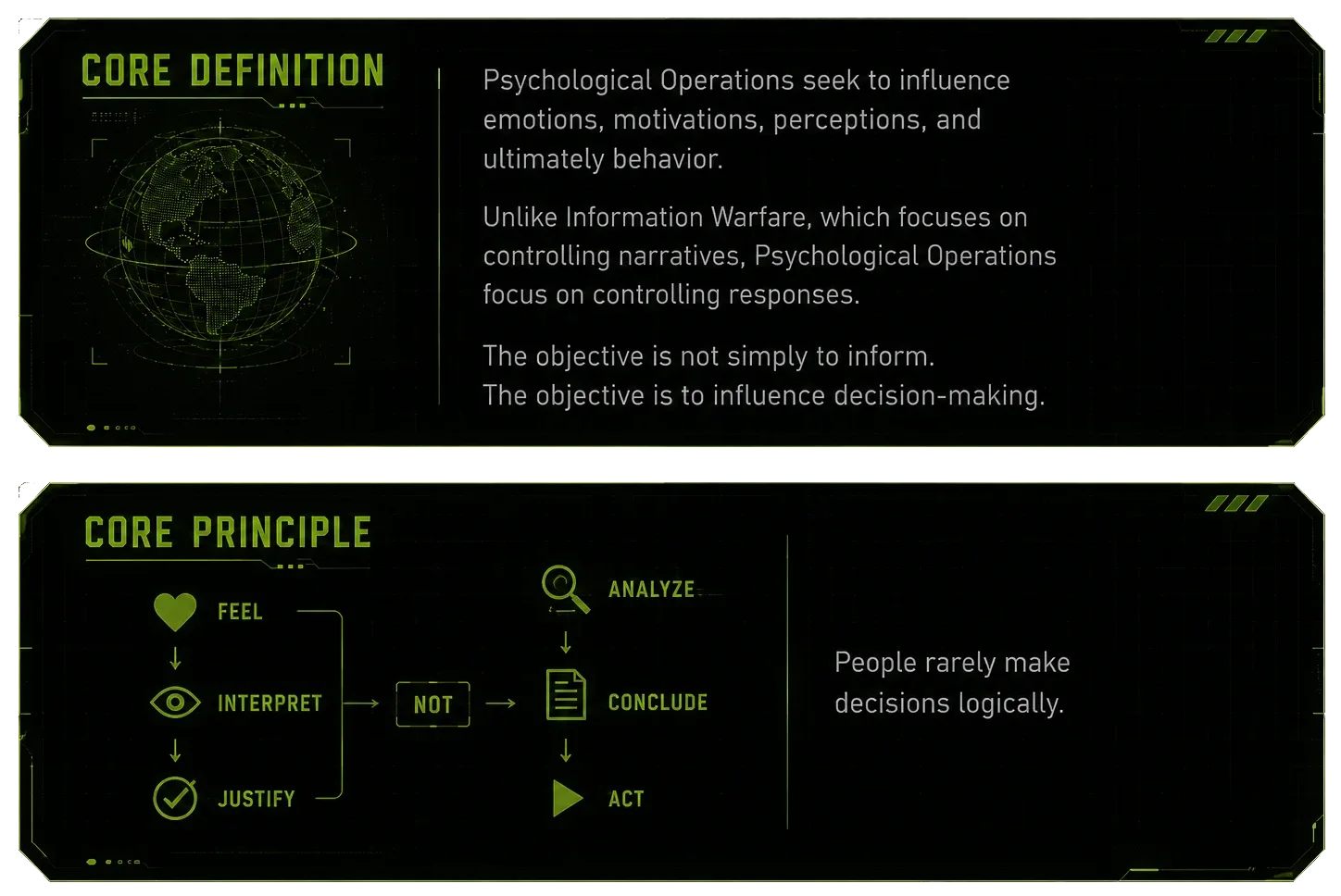
Psychological Operations seek to influence emotions, motivations, perceptions, and ultimately behavior.
Unlike Information Warfare, which focuses on controlling narratives, Psychological Operations focus on controlling responses.
The objective is not simply to inform. The objective is to influence decision-making.
CORE PRINCIPLE
People rarely make decisions logically. The real sequence is Feel → Interpret → Justify, not Analyze → Conclude → Act.
HOW IT WORKS
READ AS TEXT
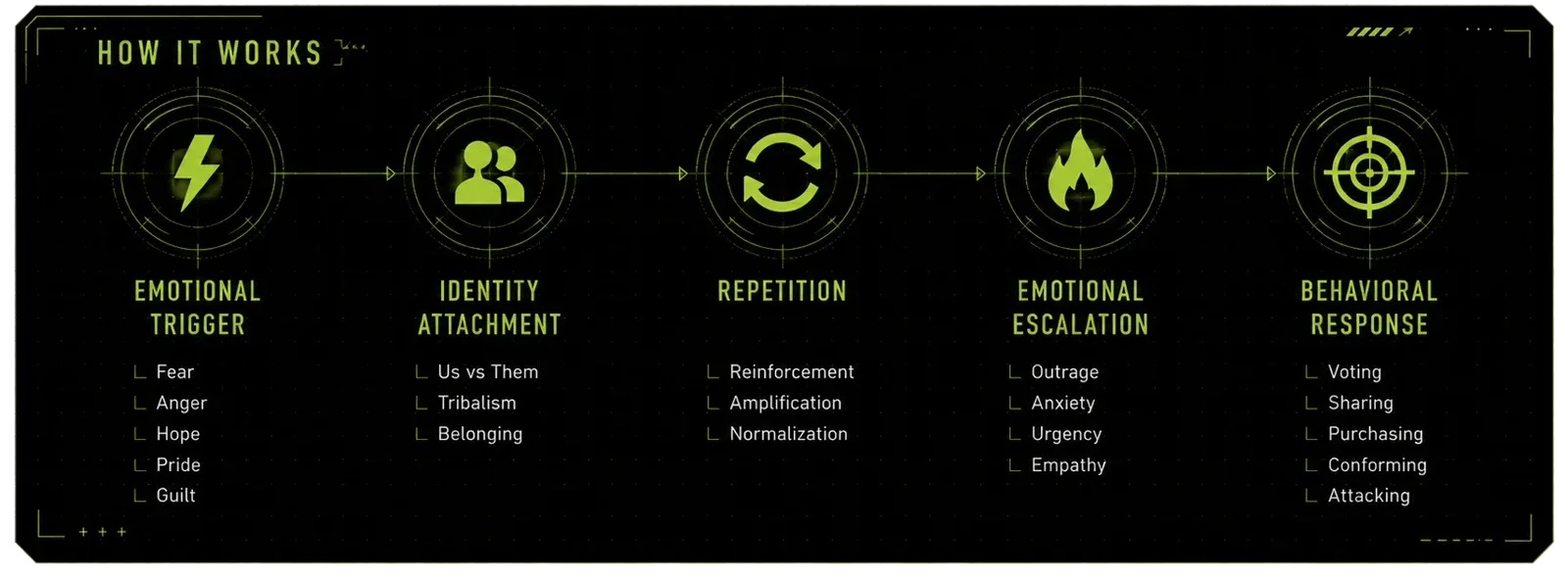
EMOTIONAL TRIGGER
- Fear
- Anger
- Hope
- Pride
- Guilt
IDENTITY ATTACHMENT
- Us vs Them
- Tribalism
- Belonging
REPETITION
- Reinforcement
- Amplification
- Normalization
EMOTIONAL ESCALATION
- Outrage
- Anxiety
- Urgency
- Empathy
BEHAVIORAL RESPONSE
- Voting
- Sharing
- Purchasing
- Conforming
- Attacking
THE PSYOPS LIFECYCLE
READ AS TEXT
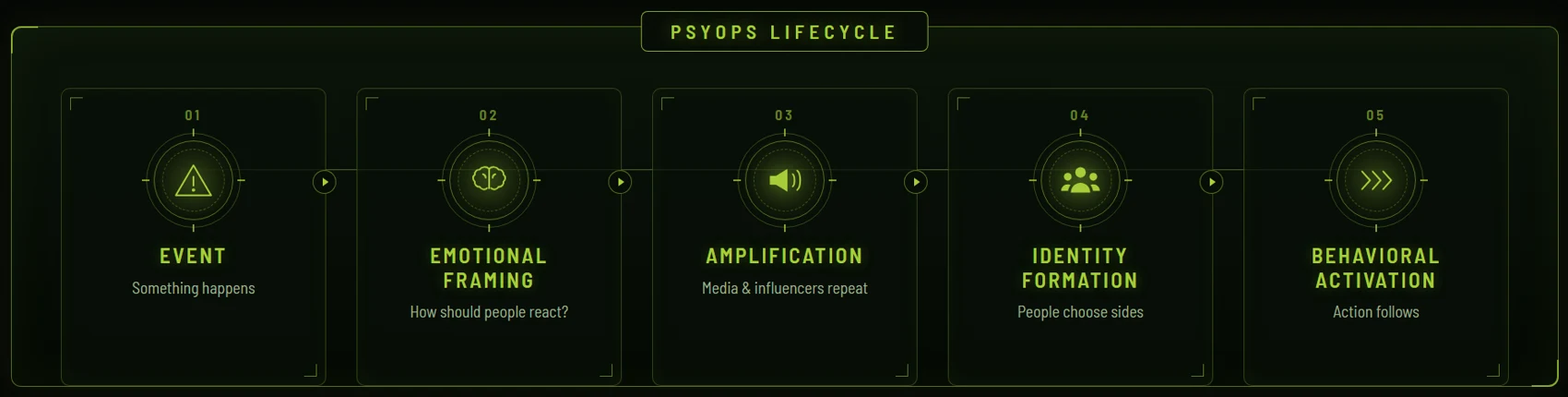
01 · EVENT
Something happens.
02 · EMOTIONAL FRAMING
How should people react?
03 · AMPLIFICATION
Media & influencers repeat.
04 · IDENTITY FORMATION
People choose sides.
05 · BEHAVIORAL ACTIVATION
Action follows.
OPERATIONAL OBJECTIVES

READ AS TEXT
- Create fear
- Create urgency
- Create tribalism
- Manufacture consensus
- Suppress dissent
- Redirect attention
- Shape identity
- Drive behavior
- Control narrative through emotion
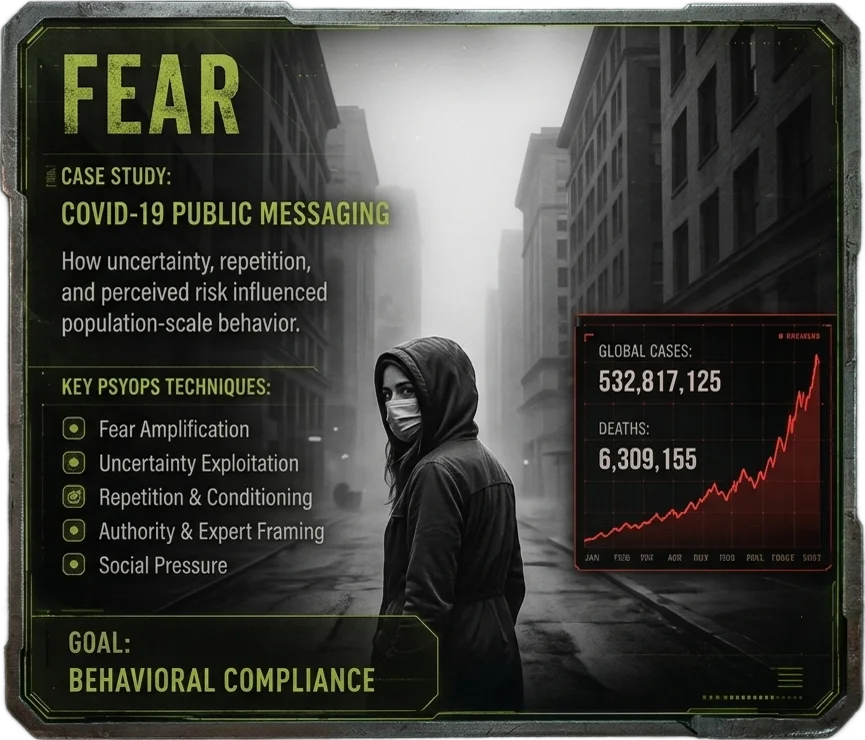
CASE STUDIES
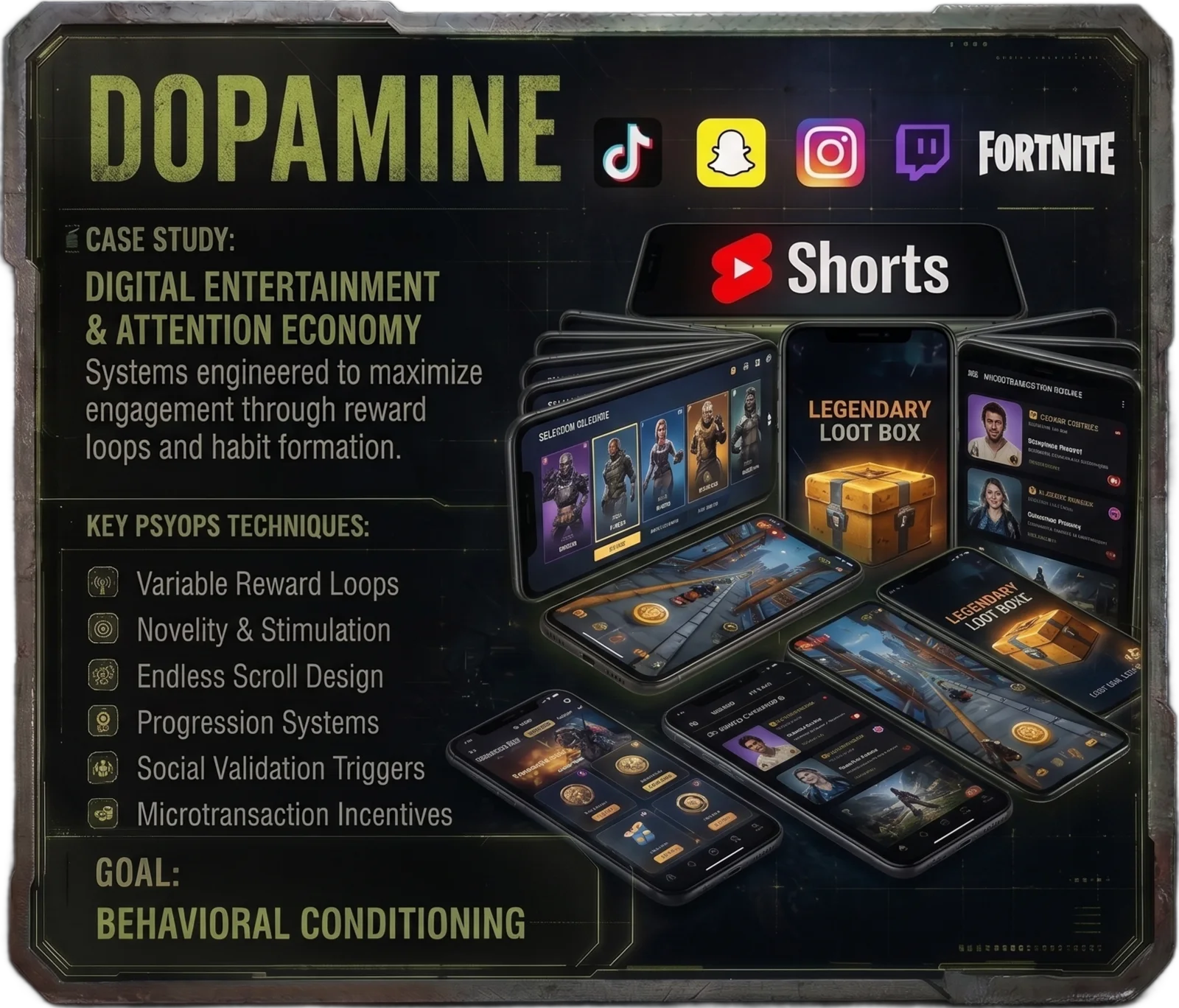
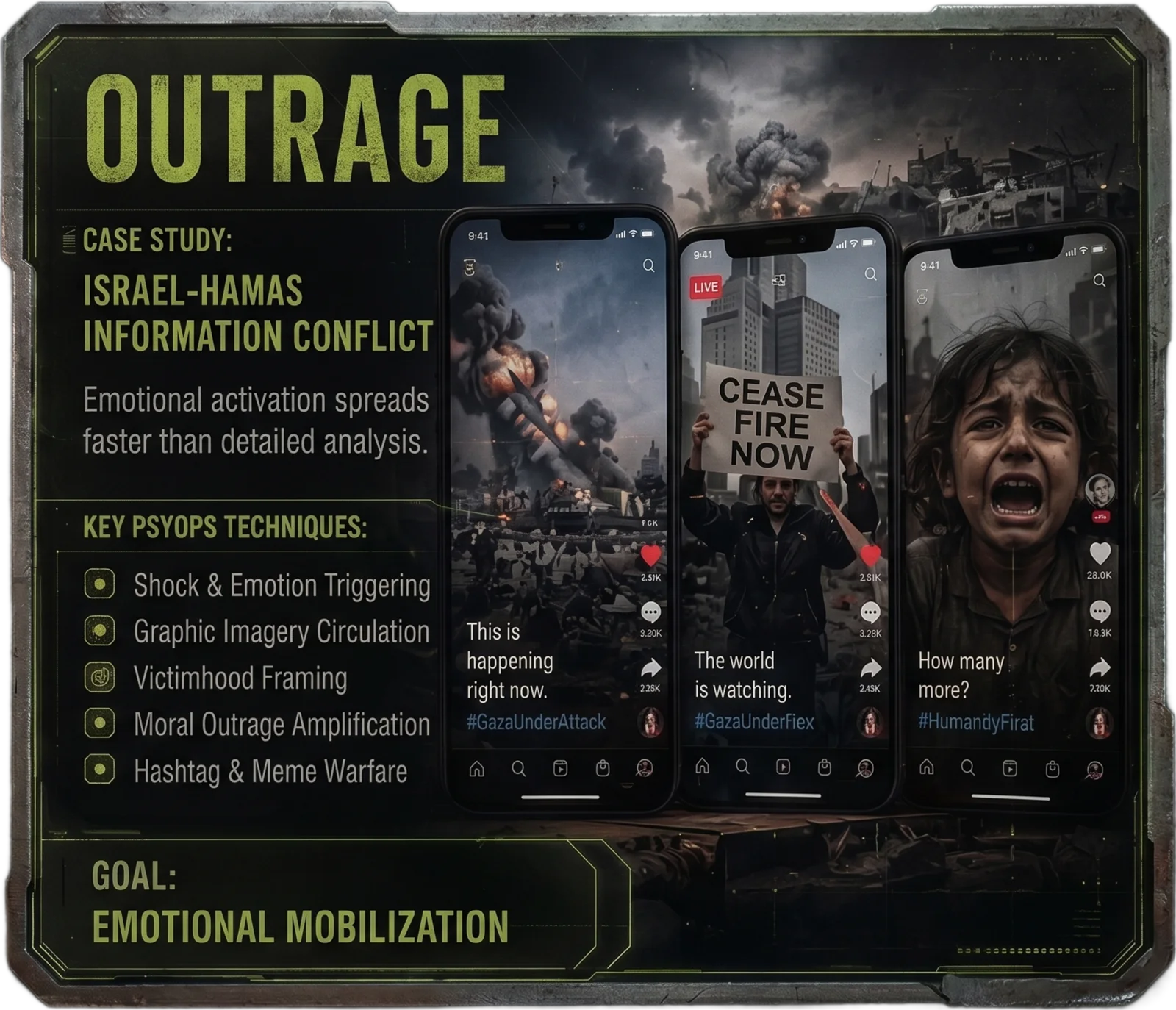
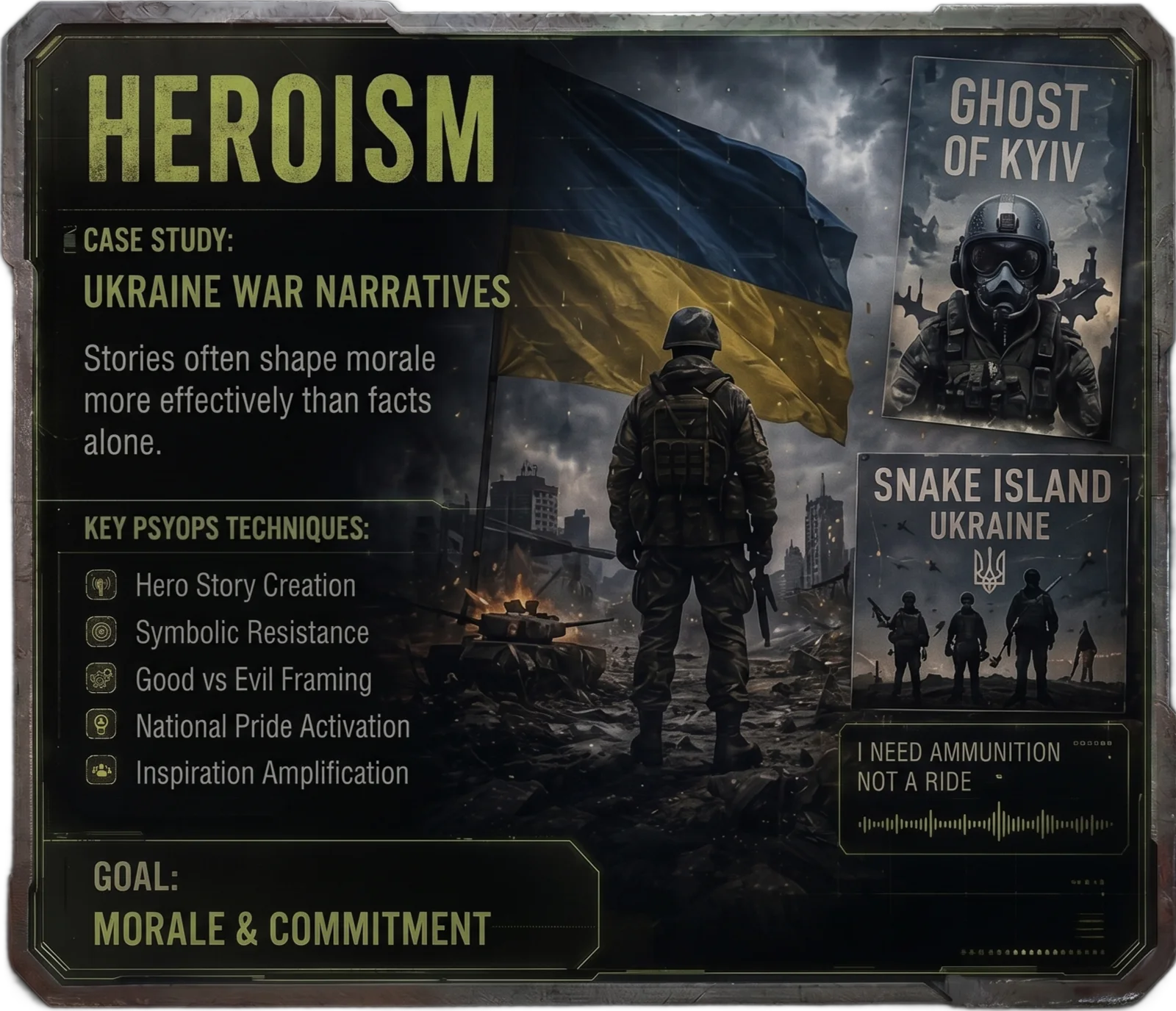
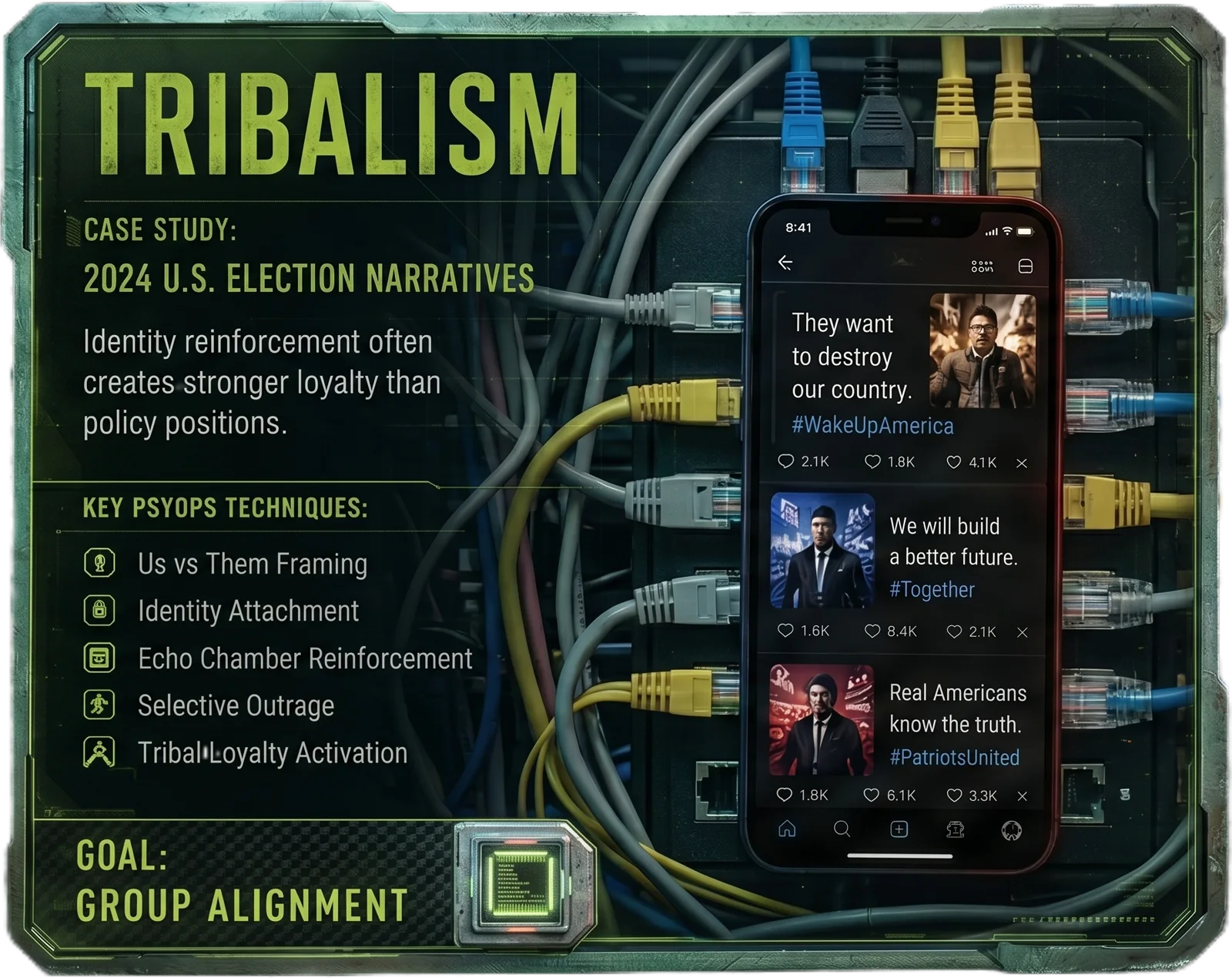
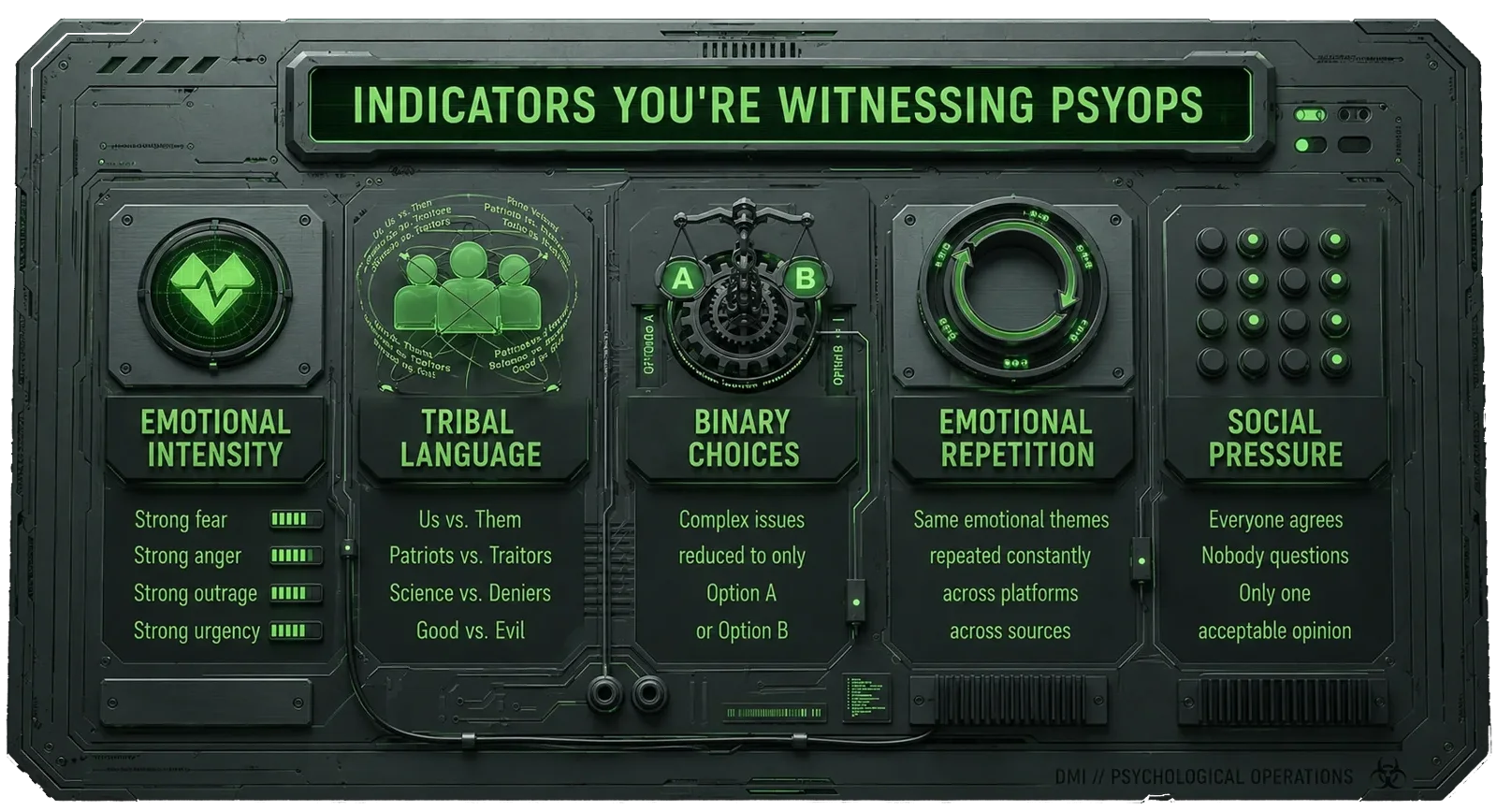
INDICATORS YOU ARE WITNESSING PSYOPS
READ AS TEXT
EMOTIONAL INTENSITY
- Strong fear
- Strong anger
- Strong outrage
- Strong urgency
TRIBAL LANGUAGE
- Us vs. Them
- Patriots vs. Traitors
- Science vs. Deniers
- Good vs. Evil
BINARY CHOICES
Complex issues reduced to only Option A or Option B.
EMOTIONAL REPETITION
Same emotional themes repeated constantly across platforms, across sources.
SOCIAL PRESSURE
Everyone agrees. Nobody questions. Only one acceptable opinion.
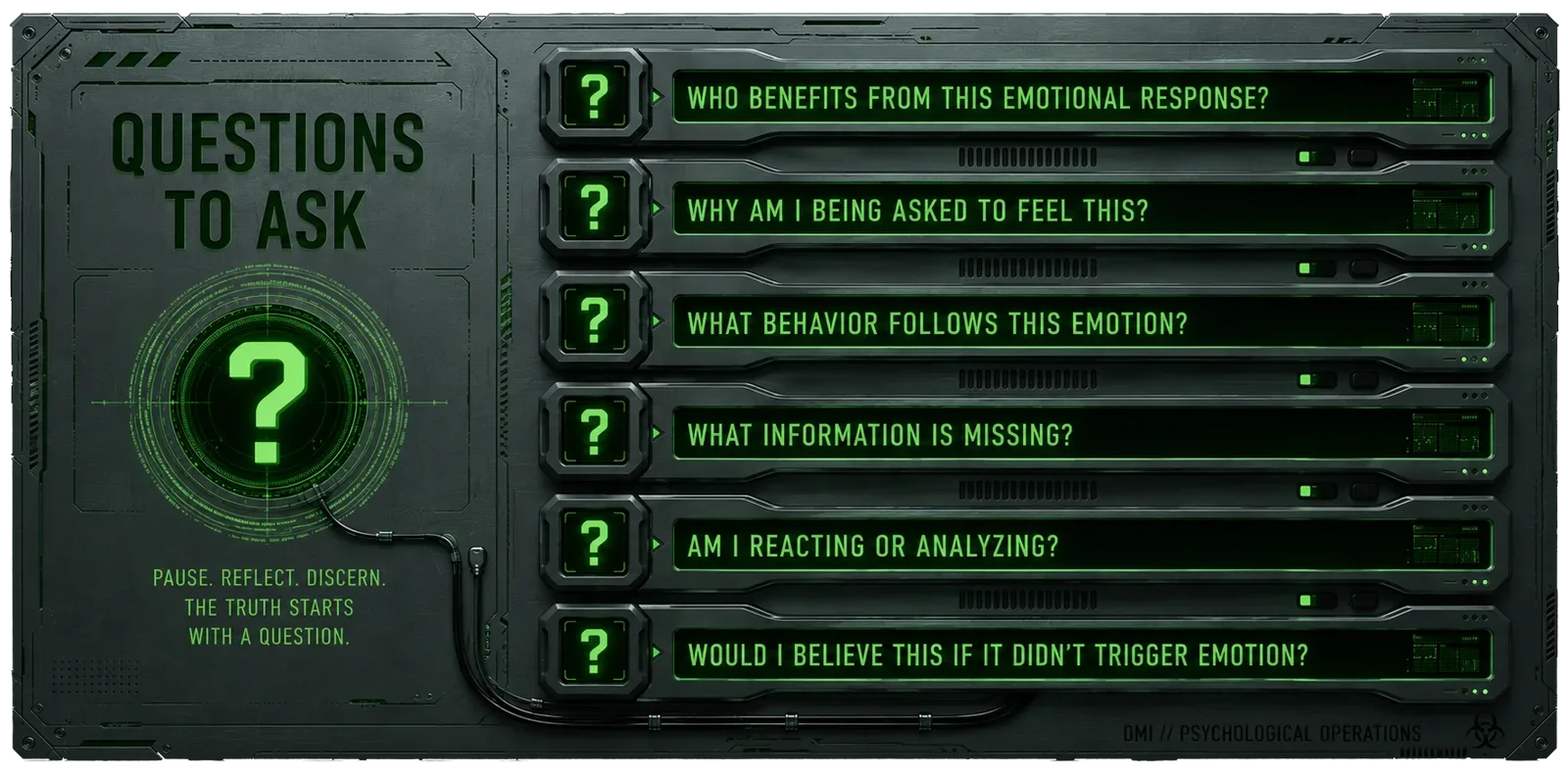
QUESTIONS TO ASK
READ AS TEXT
- Who benefits from this emotional response?
- Why am I being asked to feel this?
- What behavior follows this emotion?
- What information is missing?
- Am I reacting or analyzing?
- Would I believe this if it did not trigger emotion?
Pause. Reflect. Discern. The truth starts with a question.
DMI ASSESSMENT
READ AS TEXT
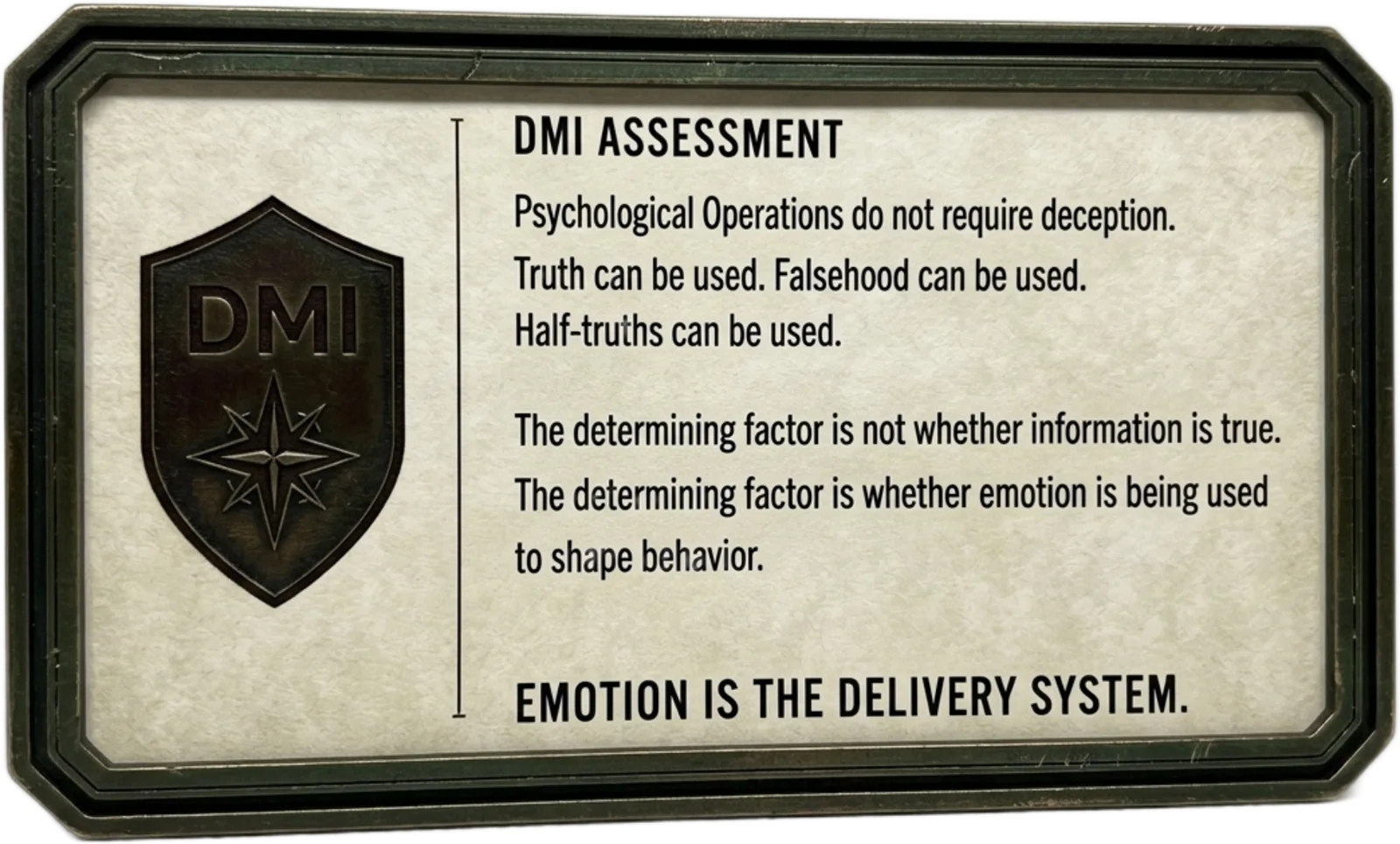
DMI ASSESSMENT
Psychological Operations do not require deception. Truth can be used. Falsehood can be used. Half-truths can be used.
The determining factor is not whether information is true. The determining factor is whether emotion is being used to shape behavior.
Emotion is the delivery system.
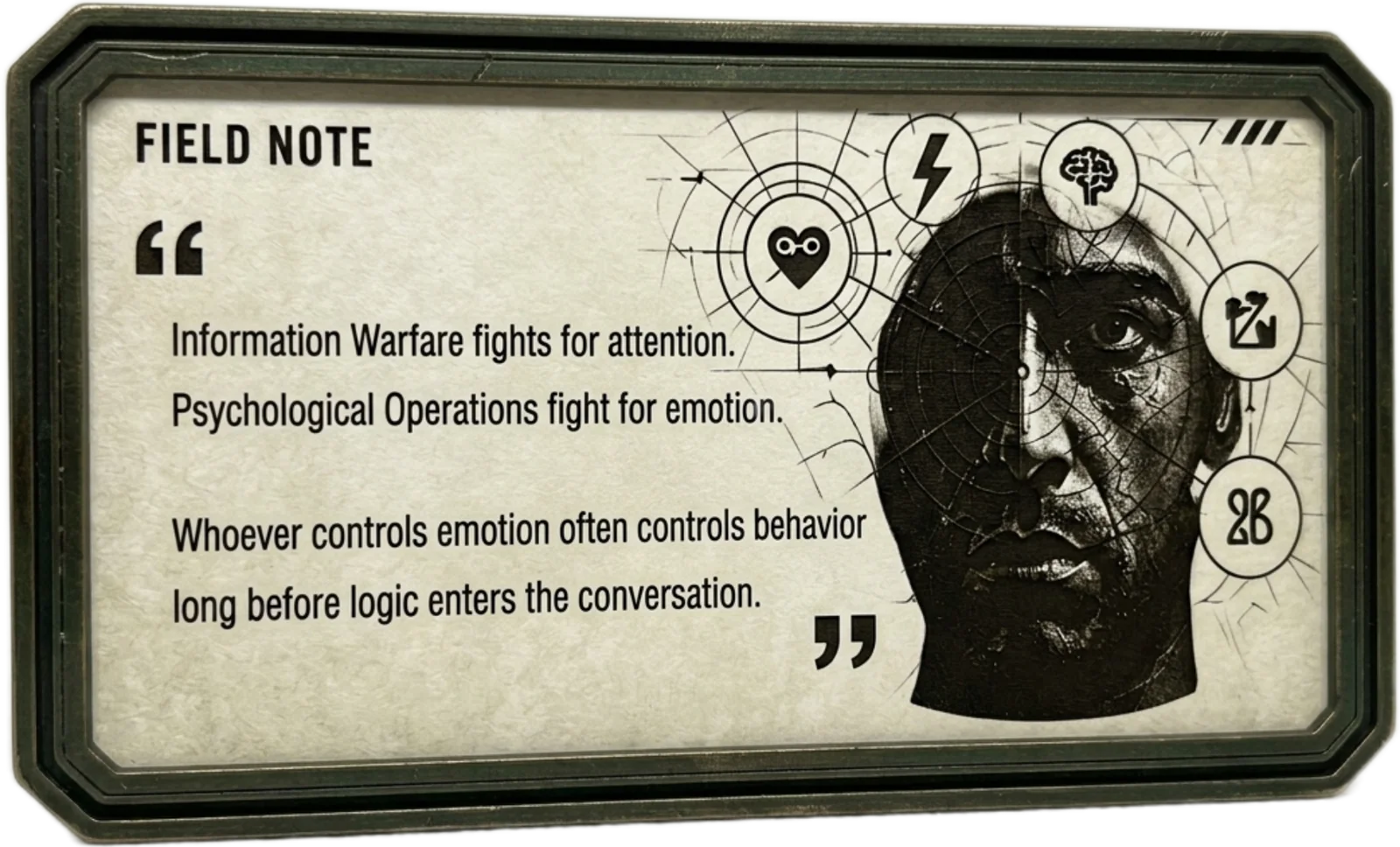
FIELD NOTE
“Information Warfare fights for attention. Psychological Operations fight for emotion.
Whoever controls emotion often controls behavior long before logic enters the conversation.”